Nutrition
How much protein per day for fat loss?
How much protein per day for fat loss? A Malta dietitian's simple per-kg formula, real Maltese-food examples, and the mistakes that quietly stall results.

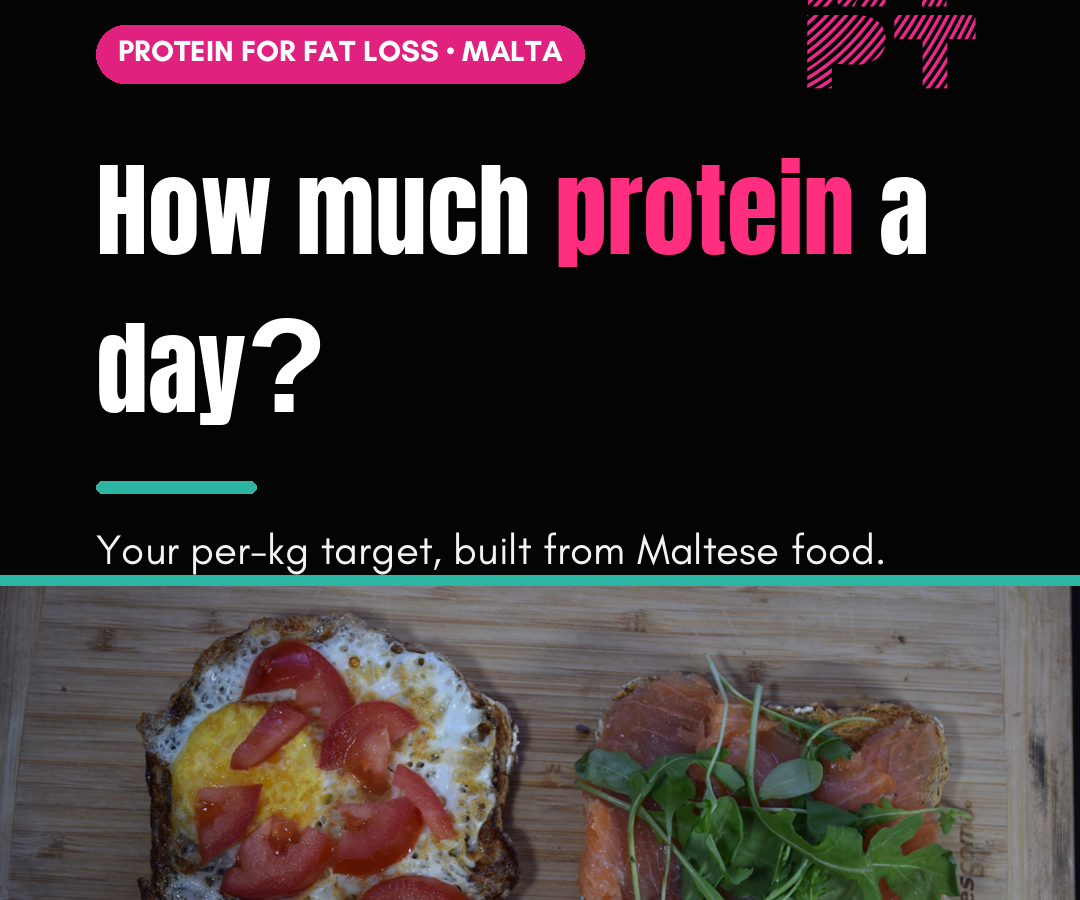
To lose fat, the protein per day for fat loss target is roughly 1.6 to 2.2 g per kg of body weight. For an 80 kg adult in Malta that's about 130 to 175 g. Protein protects your muscle in a calorie deficit and keeps you full, so more of what you lose is fat rather than muscle.
Why protein matters more when you're cutting
When you eat less to lose fat, your body looks for energy wherever it can find it, and that includes muscle. Eating enough protein is the clearest signal that tells your body to hold on to muscle and burn fat instead. It also keeps you fuller for longer, which makes a calorie deficit far easier to stick to when life in Malta is busy and the summer heat kills your appetite at lunch but not at midnight.
Muscle is also what gives you shape and keeps your metabolism ticking over. Lose weight without protein and strength work and a chunk of what comes off is the very tissue you wanted to keep. A practical bonus: high-protein meals have a higher thermic effect, meaning your body burns a little more energy just digesting them compared with fat or carbs.
Your number, in plain terms
Take your body weight in kilograms and multiply by 1.6 to 2.2. Use the higher end if you train hard, you’re older, or you have a fair bit of weight to lose. A few worked examples:
- 60 kg → about 95 to 130 g a day
- 80 kg → about 130 to 175 g a day
- 100 kg → about 160 to 220 g a day
If the maths feels fiddly, a simple rule of thumb works for most people: a palm-sized portion of a protein food at each meal, plus one protein-rich snack.
That covers fat loss specifically; for the wider picture on daily protein, see our in-depth protein guide for Malta.
What that looks like on a Maltese plate
You do not need imported powders to hit your number. Local, everyday food does the job:
- 2 eggs — about 12 g
- A grilled chicken breast — about 30 to 40 g
- A fillet of lampuki or fresh tuna — about 25 to 30 g
- A tub of Greek yogurt — about 15 to 20 g
- A couple of ġbejniet — about 12 g
- A bowl of lentils or chickpeas (great in a Maltese soup) — about 15 g
Build the plate around the protein first, then add vegetables and a sensible portion of carbs. Pastizzi can stay in your week — just not as your protein source.
Do you need shakes?
No. Whole food should cover most of your protein. A shake is only useful as a convenient top-up on a rushed day or straight after training when you’re not hungry yet. Treat it as a tool, not a requirement, and never as a replacement for real meals.
Spread it across the day
Your body uses protein best when it’s shared across the day rather than saved for one big dinner. Aim for a decent hit at each meal — roughly 25 to 40 g — so breakfast, lunch and dinner each carry their share. Most people in Malta under-eat protein at breakfast and then can’t catch up by night. A simple Maltese breakfast that front-loads protein: two eggs with a ġbejna and tomatoes, or Greek yogurt with fruit and a spoon of nuts. Start the day around 25 to 30 g and the rest of your target falls into place without much thought.
The mistakes that quietly stall results
Three patterns we see most often: a tiny, carb-only breakfast; counting milky coffees and biscuits as protein; and dropping calories so low that training suffers and muscle goes with the fat. Fix the breakfast, keep protein steady, and keep lifting, and the deficit does its job without the crash. One more: weekend drift. Five tight days undone by two loose ones nets you nowhere, so keep protein and training steady across Saturday and Sunday too, and that steady, unglamorous consistency is what actually gets results.


